The the Sea Do You Know Da Way
What Is The Difference Between Ocean And Body of water
- While there is ane global ocean, experts generally divide it upwardly into v major interconnected basins: the Pacific, the Atlantic, the Indian, the Southern, and the Chill.
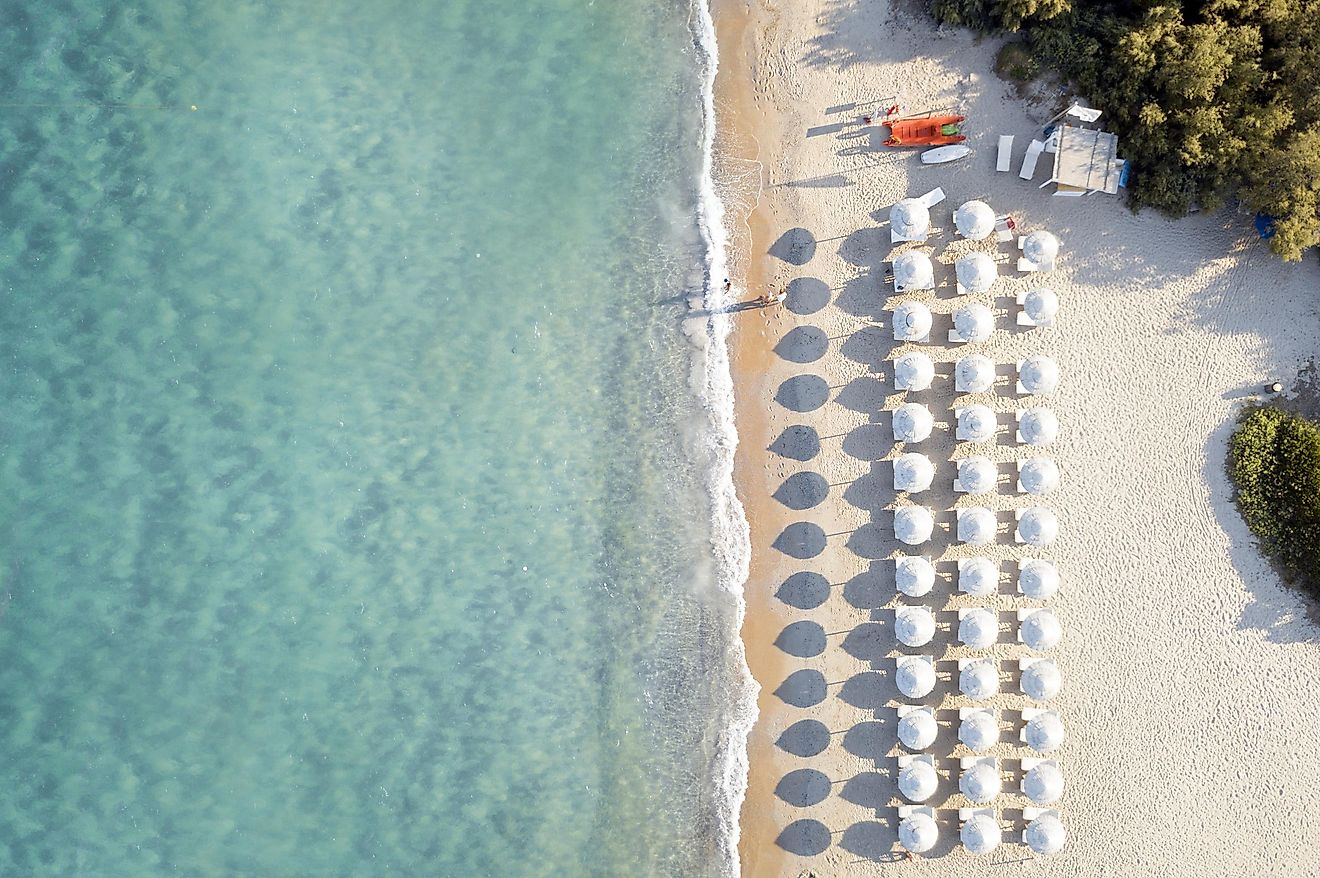
- Seas are smaller bodies of water that are partially enclosed or surrounded past land.
- The Mediterranean is the largest bounding main in the world at 2.9 million square kilometers; even so, it is smaller than the Chill Body of water.
- Even though seas are generally much shallower than oceans, the Caribbean Sea is significantly deeper than the average depth of the ocean.
Information technology is a common misconception to call back that ocean and sea are the same thing. In fact, these two words are often used interchangeably without knowing the proper definition of either. What, then, makes these bodies of water what they are? How are they similar, and more than chiefly, how are they different? The following article strives to answer these questions.
Differences Between Sea And Body of water
Location
The ocean is a large open body of table salt water. It covers roughly 71 percent of the World's total surface and contains 97 per centum of all its water. It is then large that only five percent has been explored. While there is technically one global ocean, experts generally divide it up into five major interconnected basins: the Pacific, the Atlantic, the Indian, the Southern, and the Arctic.
Seas are somewhat harder to define. Generally speaking, they are bodies of water that are partially enclosed or surrounded by land. In other words, they are the part of the ocean where water meets dry ground. In that location are several notable exceptions, still, of seas that are completely landlocked. For case, the Caspian Sea is considered the world'south largest lake, even though it is classified as a sea.
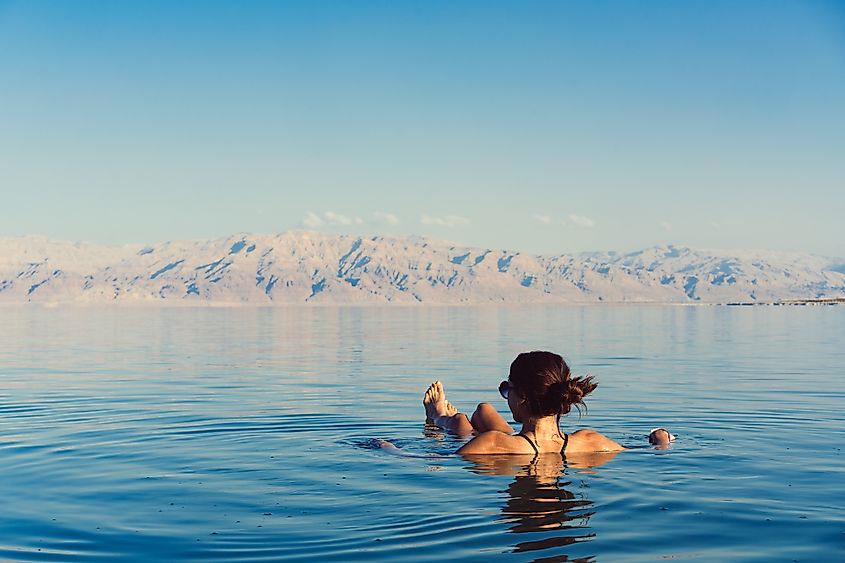
The iconic "seven seas" refers to important historical trading routes. These seas are not physical, merely rather change over fourth dimension and place. Ancient Greeks considered the Aegean and Adriatic to be a part of this seven, whereas Medieval European literature recognizes such seas as the Baltic and Arabian. Following the colonization of the Americas, the vii seas inverse again to include different waters such as the Caribbean and the Gulf of Mexico. While in that location is only one global ocean—or v, depending on one'south perspective—at that place are over fifty recognized seas today located all effectually the world.
Size
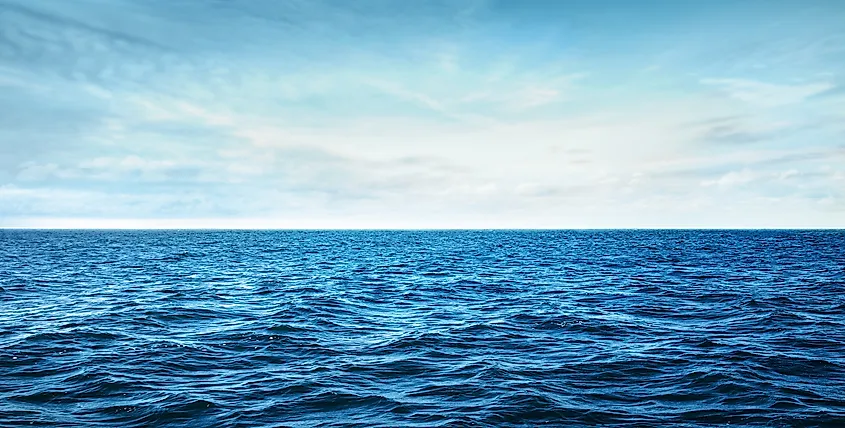
Despite the massive size of the five bounding main basins, they vary drastically in size. The Pacific is easily the biggest at 168 meg square kilometers. It extends from the n of the globe to the due south, bordering numerous countries along Asia and the Americas. Located solely in the north polar region, the Chill clocks in last at xv one thousand thousand; that is more than than a 150 meg square kilometer difference with the Pacific.
Similarly, it is hard to nail down an average size for our global seas as they come in all shapes and sizes. As a general dominion, however, they are significantly smaller. Connected to the Atlantic Bounding main, the Mediterranean is the largest sea in the earth at two.9 million square kilometers. Fifty-fifty and then, it is smaller than the Arctic Ocean. Other big seas include the Caribbean, the South Red china Sea, and the Bering Ocean in the Pacific. For comparison, the Bounding main of Marmara—an inland sea located entirely in Turkey—is 1 of the smallest at 11,350 square kilometers.
Depth
The boilerplate depth of the ocean is 3,700 meters, merely some parts get much farther. The Mariana Trench is the deepest location on Globe at 11,034 meters; in fact, Mount Everest would be completely submerged if placed at the bottom.
There are several ways of dividing the ocean into unlike zones, but most experts agree on a v layer model: the epipelagic, the mesopelagic, the bathypelagic, the abyssopelagic, and the hadalpelagic zones. Needless to say, the Mariana Trench belongs in the last. The portions of bounding main that make up the average depth exist in the bathypelagic, which extends downward from the 1,000 meter mark to four,000 meters.
All oceans and seas contain an epipelagic zone as it extends from the surface downwardly to 200 meters. In this layer, at that place is plenty of sunlight, which allows for photosynthesis to take place.
Seas are generally much shallower than oceans, just every bit they are smaller. Regardless, some seas accept nifty depths, such as the Caribbean, which is the deepest in the world at seven,686 meters—a number significantly college than the average depth of the ocean.
Marine Life
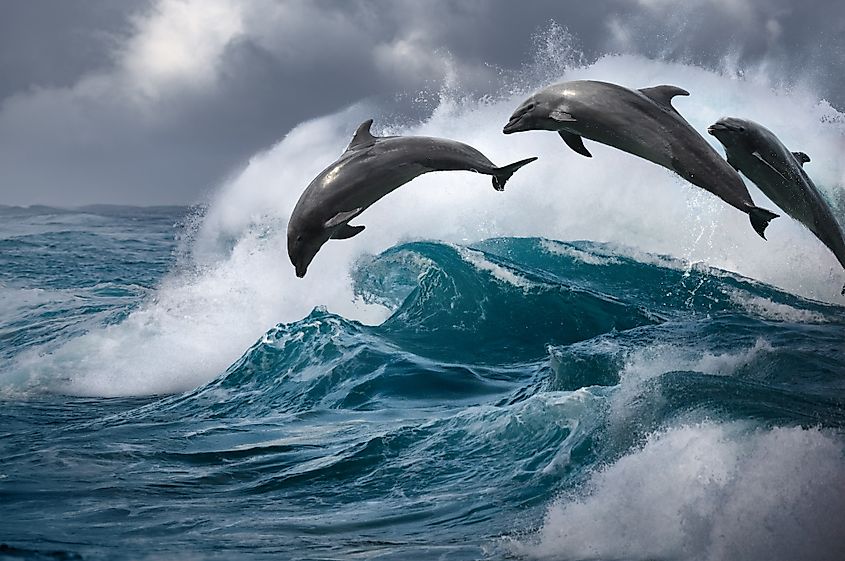
Experts estimate that there are approximately one 1000000 species of animals living in the ocean; still, they are not evenly spread out across the world. Numerous factors influence the amount and level of diversity of these creatures within specific regions. Such factors include temperature, depth, and altitude from land.
Fish and other aquatic animals tend to thrive in seas because they are friendlier environments. Oceans, which are typically far deeper and vast, host more basic life forms like plankton and shrimp. Due to this principal divergence, seas are used more than for commercial fishing, while oceans are utilized for mining other resources, such equally oil and natural gases.
The words "ocean" and "sea" are ofttimes used to hateful the same thing, but this is technically incorrect. There is one global ocean, a vast continuous torso of salt water that can be cleaved downwardly into five major basins. Seas, on the other hand, are typically pocket-sized areas of an body of water that are partially enclosed by land. They both vary in size, depth, and variety.
Earth is covered primarily past water. Because of this, the more we acquire about our oceans and seas, the more we can begin to fully understand our beautiful blue planet.
Source: https://www.worldatlas.com/articles/what-is-the-difference-between-an-ocean-and-a-sea.html
0 Response to "The the Sea Do You Know Da Way"
Postar um comentário