Can I Sous Vide a Frozen Chicken Breast?
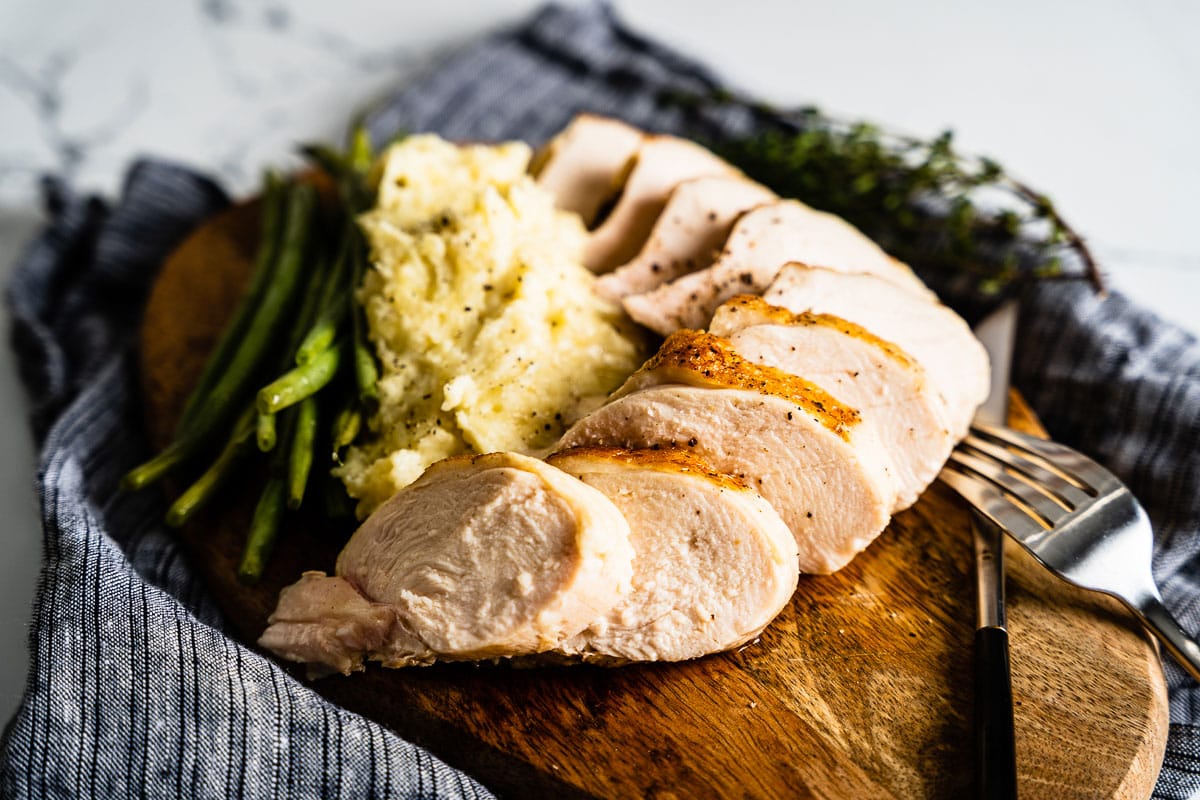



Juicy and unbelievably tender. Let's be real: These are two characteristics that chicken breasts usually lack. In fact, they are often really boring and can be tricky to cook. They usually lack flavor and are almost always dry and chewy, because cooking perfect chicken breasts can be a challenge.
Unlike chicken thighs, which give a nice margin for error, breasts need to be pretty exact for that wow factor. This is when the sous vide technique is superior, and this recipe makes them mind-blowing.
Once you sous vide chicken breasts, you will be hooked. There's no going back! Seriously! And if steak wasn't your first sous vide experiment, maybe chicken breast should be. This can be your gateway into the magic of sous vide cooking.
What Is Sous Vide Cooking?
Sous what? Sous vide, pronounced "sue veed" is a French term that translates to "under vacuum." In cooking, it is basically the technique of vacuum-sealing food in a plastic bag and submerging it into a precisely temperature-controlled water bath for a certain amount of time.
That's all sous vide is. Sounds simple, and it really is! As simple as the concept is, the results are magical.
Sous vide is the secret method that restaurants have been using for years to serve perfectly cooked food. While the chefs are obviously great at cooking, they use sous vide to eliminate guessing and produce textures that are extremely difficult to achieve with traditional methods.
Sous vide can also be combined with other cooking methods; I use it to make amazing results with BBQ smoking, which is a lot of fun.
Why Sous Vide Works So Well for Chicken Breasts
When you cook chicken breasts on the stove, grill or in the oven, the chicken needs to reach an internal temperature of 165° F in order to make it safe to eat. The problem with that is the heat source is much hotter than 165°; it's usually more than double the temperature.
That means that once the chicken is technically "cooked" in the center, the temperature will keep climbing if it isn't removed from the heat at the perfect time. It also means that the temperature closer to the exterior is going to be hotter than 165° (and yep, that means overcooked). If you want perfectly cooked chicken, your timing has to be perfect, which is really difficult to do.
Sous vide makes it next to impossible to overcook chicken.
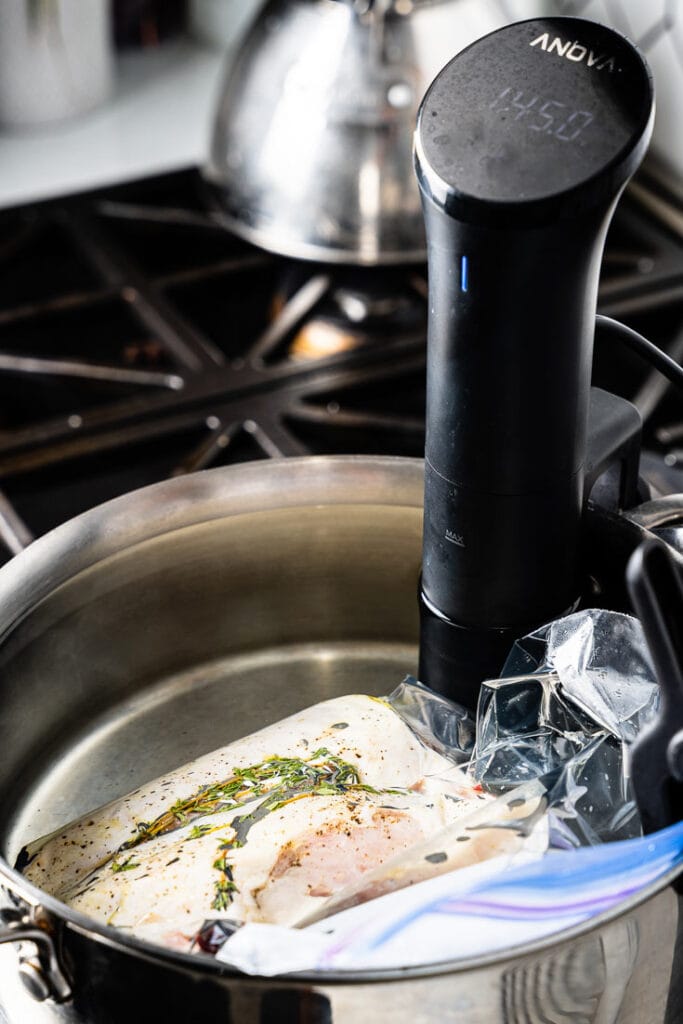
This is where the sous vide method has a huge advantage. By cooking the chicken breasts in a lower temperature water bath for a longer period of time, they get fully cooked and pasteurized. And there's no possibility of the temperature going higher than what you set it to. This gives a big window of cooking time without having to worry about them overcooking.
When you cook the chicken breasts sous vide, they will cook to the exact perfect temperature with no guessing. Below are the numbers for temperature and time to make it perfect.
145° F for 1 ½ to 2 hours are the magic numbers.
Here's why: Cooking boneless skinless chicken breasts always feels like a guessing game. It goes on the grill, when is it done? Do you cut into it to check? Do you use a thermometer? Either way, the chicken breasts just aren't going to be great.
Boneless Skinless vs. Skin-On Breasts
One of the healthier proteins is chicken breast. It's often boring and lacks flavor. Not with sous vide. You will be loving the flavor and tenderness even without the crispy skin.
That doesn't mean that skin-on breasts aren't amazing. They are my preferred option as the skin adds wonderful texture and flavor when it's seared at the end.
Advantages of Sous Vide for Chicken Breasts
- Perfectly cooked every time: There's no guessing; it's just science and it works.
- The texture is wonderfully tender and juicy.
- Super healthy: You can cook with no added fat.
- Convenient and totally hands-off: Can be prepped or even cooked ahead of time (see below for details).
- Gives you the freedom to entertain dinner party guests while the sous vide does its magic.
- You can add flavors to the bag that will be infused into the chicken while it cooks; though I like to keep it simple with kosher salt, freshly ground pepper and thyme.
How to Sous Vide Chicken Breasts
If you can cook pasta, you can easily sous vide chicken breasts. Since boneless skinless chicken breasts don't have a ton of favor on their own, seasoning and adding fresh thyme or other herbs are pretty key to adding wonderful flavors.
- Fill a large pot or container with water and set the sous vide machine to 145° F / 62.7° C.
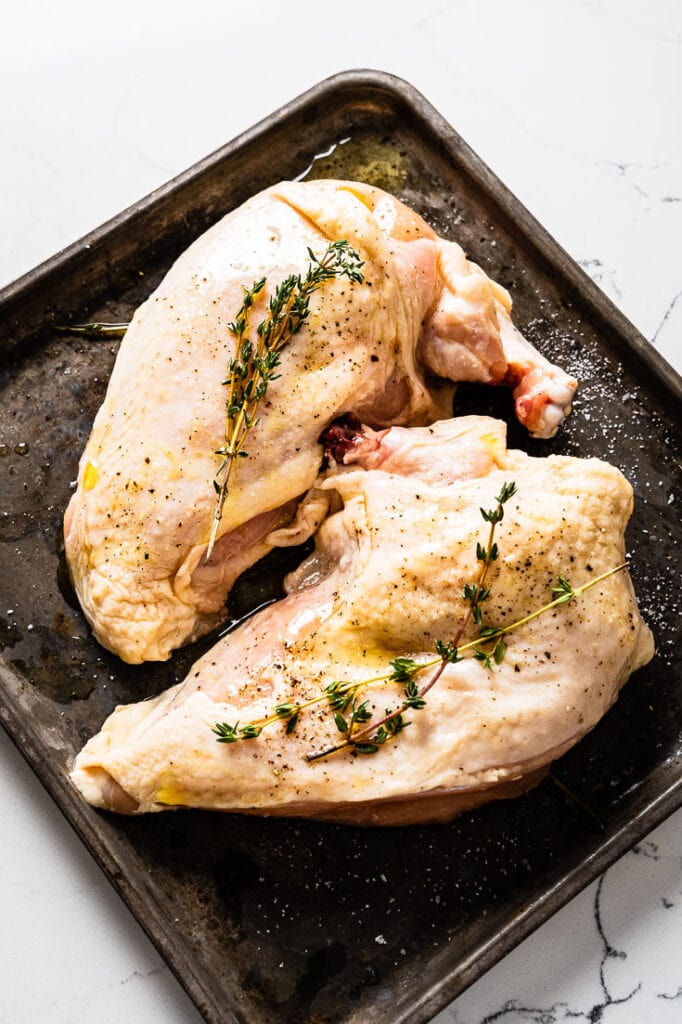
- Drizzle a little olive oil on the chicken breasts, then season liberally with Kosher salt and freshly ground pepper and place a few fresh thyme sprigs on each side of the breasts.
- Transfer the chicken to a vacuum seal or Ziplock bag in a single layer so they are as exposed to the water bath as much as possible, along with any sauce or marinade if you are using one.
- Vacuum seal or use the water displacement method (see below for a primer on this), and then carefully submerge into the water bath.
- To keep the bag in place and submerged, clip it to the side of the container.
- Cook the chicken at 145° F for 1 ½ to 2 hours (the result will be the same within this time window).
- Remove the bag from the water bath and remove the chicken from the bag or chill in the bag if using later or plan to sear.
- Consider searing (optional if you have skinless). See below.
Pro Tips
A few easy tips that will up your chicken breast game:
Customize the Texture by Changing the Temp
Sous vide chicken breast temp can vary depending on how you plan to use the finished product. Chicken can be many textures, and customizing your results is as simple as changing the temperature of the water bath.
My go-to for perfect succulent chicken breast is 145° F / 62.7° C. But if you want to make shredded chicken, you'll want it to be slightly firmer and a little stringy, so go with 160° F / 71º C.
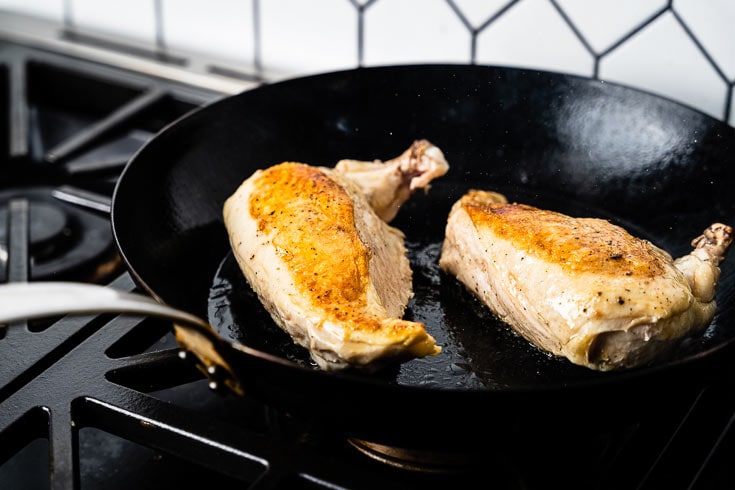
Searing Methods: Options for the Perfect Finish
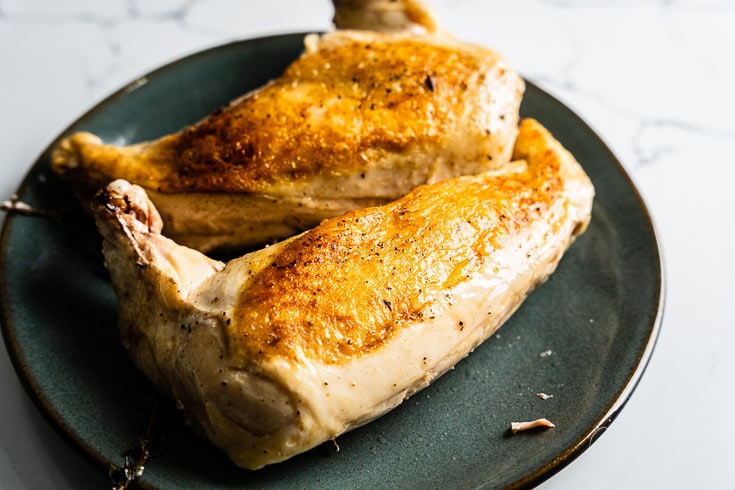
You definitely don't want to skip the sear step when using skin-on chicken breasts: After the chicken is cooked in the water bath, you can sear the skin side to give it crispy skin, a definite flavor and presentation boost.
There's no need to sear boneless skinless chicken breasts as there is no fat to crisp.
In order to not overcook the chicken, it's best to cool the chicken down while still in the bag prior to searing. Then dry the skin with paper towels, season again with a little more kosher salt and pepper (as some of it will have washed off during the cook).
In a skillet (my preferred method): Heat a heavy-bottom skillet over high heat with a little canola oil until it just starts to smoke. Sear the chicken breast skin-side down for 45 seconds to 1 minute to brown and crisp up the skin.
On the grill: If your grill is quick to heat up, a quick sear on the grill can add a lot of flavor.
With a gas torch: Use a gas torch (I recommend the Bernzomatic TS8000) to sear the skin side. Pat the chicken dry and in a safe area away from countertops, very carefully hold the torch 3 to 4 inches from the chicken skin and brown it up. It takes a little practice and patience, but the results can be delicious.
Using Ziplock Bags for Sous Vide (Water Displacement Method)
You can either use a vacuum-seal bag or a Ziplock bag with the same results.
No vacuum sealer? No problem. Just use the water displacement method to remove the air from the bag. To do this, push out most of the air by hand. Close the bag most of the way. Then carefully lower the bag into the water (always leaving the opening above the water line so as not to get any water in the bag). The pressure of the water will push out most of the rest of the air. Seal the bag fully, and it's ready to go.
It's important to get as much air out of the bag as possible, so the water can fully be in contact with the chicken for proper cooking. The bag can then be clipped to the side of the container.
It's also important to keep the food submerged to get it fully cooked. If your bag keeps floating to the surface, place a small bowl or plate on top to keep it submerged.
Meal Prep Tips
The sous vide method is really great for meal prep, and you can do several meals at once. Prep the bags by seasoning the chicken, adding seasonings or a sauce, vacuum seal and they are ready to go. You can keep them in the fridge if using in the next few days or freeze for later use. Just add an hour to the cook time if cooking frozen chicken breasts.
You can also cook the breasts sous vide ahead of time, cool in an ice bath and store in the refrigerator still sealed in the bag for up to 5 days until you are ready to use, or freeze and use a few months later.
To reheat the chicken: Just place the bag back in a water bath at the same temperature you initially cooked it at for 30 minutes to warm through.
FAQs
What temperature do you sous vide chicken breast?
The water bath should be set to 145° F / 62.7° C.
How long does it take to sous vide chicken breast?
The perfect cooking time window is between 1 ½ and 2 hours but can be left in the water bath for up to 3 hours with almost no difference in texture.
Can you cook frozen chicken sous vide?
Absolutely! One of the great things about cooking sous vide is you can add vacuum-sealed frozen foods right to the water bath. For boneless skinless chicken breasts, just add an extra hour to the cooking time and everything else is the same.
Is sous vide chicken safe?
Yes! Sous vide chicken is safe to eat even though it is not cooked to 165°F. While the FDA recommends cooking the chicken to 165°F to pasteurize it; pasteurization is actually based on both the temperature and time it is at that temperature. The recommended 165°F is really the "nuclear option" to pasteurize it.
Bringing the chicken to 145° F for 9.2 minutes will also pasteurize, reduce the bacteria, without overcooking it. If you cooked chicken 9 minutes after it reached an internal temperature of 165° F in the oven, the chicken would be dry.
If you are interested in learning more, check out this post from Serious Eats on sous vide chicken and food safety.
What sous vide machine should I use?
In the last few years, high-quality consumer-grade sous vide machines have become very popular and inexpensive. The Anova Nano Precision Cooker is a great machine to start with for under $75. A step up in terms of power is the Anova WiFi circulator. Anova also makes some great containers for your water bath.
Check out my post with all the essential Sous Vide Accessories to get you cooking sous vide at your best.
Marinades / Seasonings to Try
One of the great things about cooking chicken breasts sous vide is you can add any flavor you like, and the chicken will totally take on that flavor. I almost always add fresh thyme sprigs to each side of the chicken breast, and each bite has the essence of the thyme flavor.
Try adding lemon slices, BBQ sauce, pesto, chimichurri, other herbs, butter, romanesco, or just about anything else you can think of to add variety and tons of great flavor to your chicken breasts.
Vacuum sealing with a sauce can be impossible unless you have a fancy chamber vacuum sealer. To get around this, you can partially freeze the bag with the sauce and then vacuum seal it. Or just use Ziplock bags and the water displacement method instead.
Inspiration for Using Sous Vide Chicken Breasts
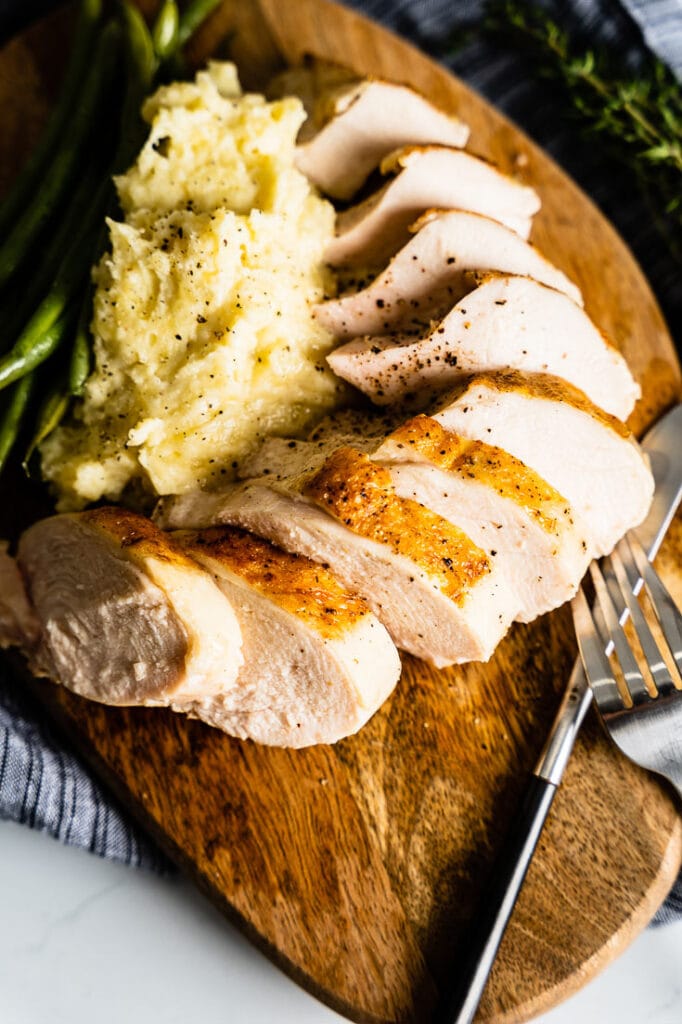
One of the beauties of chicken breast is its versatility. In terms of planning menus and cooking ahead of time, sous vide chicken breast is a superstar. The perfectly cooked chicken breasts can be sliced and eaten as is, or on top of a Caesar salad, in a sandwich, pasta, made into a chicken salad, diced and used in tacos and so much more.
For pulled chicken (cook at the higher temp, 160° F / 71º C, as I mentioned above), shred the chicken and toss with a sweet and smoky BBQ sauce.
Special Equipment Used
You can see the equipment used (below) or check out the post all about Essential Sous Vide Accessories.
Contains affiliate links where I might receive a commission if you make a purchase, at no additional cost to you. Thanks for your support!
- Anova Nano Precision Cooker
- Water bath container or large pot
- Food Saver Vacuum Sealer (optional)
- Vacuum seal bags (optional) or Ziplock freezer bags
- Bag clips
- Skillet for searing
- 2 chicken breasts (skin on or skinless)
- olive oil
- Kosher salt
- freshly ground pepper
- 4 thyme sprigs
-
Fill a large pot or container with warm water and heat the water bath to 145° F / 62.7° C according to your sous vide machine's instructions.
-
Drizzle a little olive oil on top of the chicken breasts, then liberally season on both sides with kosher salt and freshly ground pepper. Place a thyme sprig on each side of the breasts, then place the chicken in a vacuum seal bag or Ziplock bag.
-
Vacuum seal the bag if using a vacuum sealer; or if using a Ziplock bag, use the water displacement method: Partially seal it, removing as much air as possible, then place it in the water to push the rest of the air out before sealing the rest of the way.
-
Clip the bag to the side of the pot or container to keep it submerged, and cook for 1 ½ to 2 hours (3 if the chicken is frozen).
-
Remove from the water bath and rest for 5 to 10 minutes in the bag.
-
Remove the chicken from the bag and place on a cutting board to slice or dice.
-
To sear skin-on breasts: Heat a heavy-bottom skillet over high heat with a little canola oil until it just starts to smoke. Dry the skin with paper towels, season again with a little more kosher salt and pepper. Sear the chicken breast skin-side down for 45 seconds to 1 minute to brown and crisp up the skin. Serve immediately.
- This recipe is for two chicken breasts but works the same for more or less quantity. Just keep them flat in the bag.
- If you want to make shredded chicken, cook at 160° F / 71º C; you'll get a texture that's slightly firmer and a little stringy.
Calories: 237 kcal | Carbohydrates: 1 g | Protein: 24 g | Fat: 15 g | Saturated Fat: 4 g | Trans Fat: 1 g | Cholesterol: 72 mg | Sodium: 1234 mg | Potassium: 268 mg | Fiber: 1 g | Sugar: 1 g | Vitamin A: 192 IU | Vitamin C: 3 mg | Calcium: 24 mg | Iron: 1 mg
This post was originally published August 26, 2018 and was last updated January 21, 2021 to include updated information and new photos.
More Delicious Sous Vide Recipes
- Sous Vide Crème Brûlée
- Sous Vide Steak
- Sous Vide Turkey Breast
- Sous Vide Potatoes
- Sous Vide Carrots
- Sous Vide Mashed Potatoes
Can I Sous Vide a Frozen Chicken Breast?
Source: https://saltpepperskillet.com/recipes/sous-vide-chicken-breast/#:~:text=Can%20you%20cook%20frozen%20chicken,everything%20else%20is%20the%20same.
0 Response to "Can I Sous Vide a Frozen Chicken Breast?"
Postar um comentário